Mistakes in the management of gastric polyps and how to avoid them UEG United European
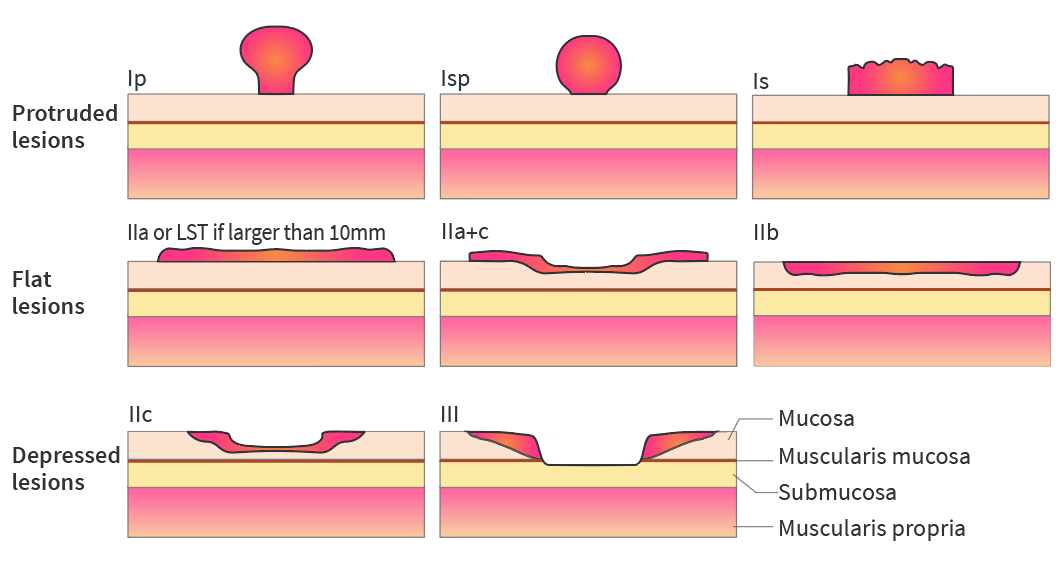
The Paris classification attempts to achieve a precise morphological definition based on measurements, but in view of the lack of precision of endoscopic assessments, this is unrealistic.. In American studies of colorectal polyps, a flat adenoma is defined as having a maximum height of 1.3 mm [6]. This is based on a histological study that.
Tu1071 ENDOSCOPIC CHARACTERISATION OF SMALL/DIMINUTIVE POLYPS BY GASTROENTEROLOGY TRAINEES A

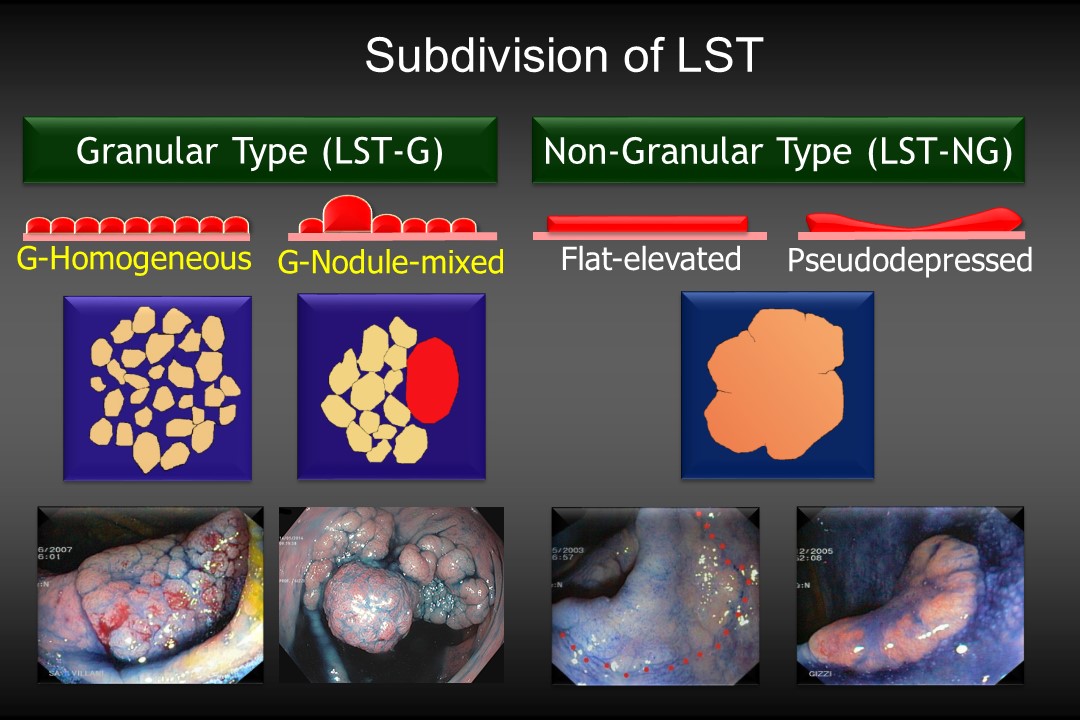
Executive summary of key recommendations. Guideline recommendations: Definitions We suggest that the term 'non-pedunculated colorectal polyp' (NPCP) is the most appropriate term to define sessile and flat colonic lesions, whereas the Paris classification and the term 'laterally spreading type polyp' (LST) may be used to subclassify lesions further.
Paris classification Digestive Disease Dashboard

Polyp Classification Tool Paris Classification The Paris endoscopic classification of superficial neoplastic lesions All mucosal polyps are considered superficial according to the Paris classification and are therefore labelled type "0" below Protruding Non-protruding (Flat)
Laterally Spreading Tumours of the Colon Colon Explorer
The Paris classification is a consensus classification of superficial gastrointestinal tract lesions that describes the shape of a neoplastic lesion.. Treatment with argon plasma coagulation reduces recurrence after piecemeal resection of large sessile colonic polyps: a randomized trial and recommendations.
HCC 1475 9 Colon Polyp Classification YouTube

- Paris classification system of superficial lesions - First surveillance interval after normal colonoscopy or adenomas - Second surveillance colonoscopy interval; Figures. A polyp of the colon refers to a protuberance into the lumen above the surrounding colonic mucosa. Colon polyps are usually asymptomatic but may ulcerate and bleed, cause.
Paris endoscopic classification. Download Scientific Diagram

The Paris classification, based on earlier Japanese classifications, was developed to allow morphological classification of superficial lesions [4,5]. The Paris classification should therefore be regarded as a part of standard endoscopic terminology.. In American studies of colorectal polyps, a flat adenoma is defined as having a maximum.
The Paris endoscopic classification of colorectal polyps. Adapted from[23]. Download

gies for Malignant Colorectal Polyps. PARIS CLASSIFICATION The Paris classification has been the most used interna-tional endoscopic classification of colorectal lesion morphology (Figure 1).12 Although studies have shown only moderate agreement among Western experts using the Paris classification, the application of a minimal
35 Colorectal Polyps and Cancer Screening/Prevention Abdominal Key

The Paris classification is built upon the Montreal classification to better capture the dynamic nature and complexities of the pediatric disease phenotype; the Montreal Classification has shown to have moderate inter-rate reliability when used in pediatric populations 1,3. This is among the list of revisions to the international classification.
Subdivision of polyps according to Paris classification. Adopted from [5]. Download Scientific

Before the Paris classification of colonic neoplasms can be adequately used in western endoscopy units, it seems necessary to train endoscopists to achieve uniformity in classifying morphology of colonic lesions. Training schedule. Step 1: basics. Step 2: examples. Step 3: training. Step 4: 'feedback'.
Endoscopic management of colorectal polyps From benign to malignant polyps
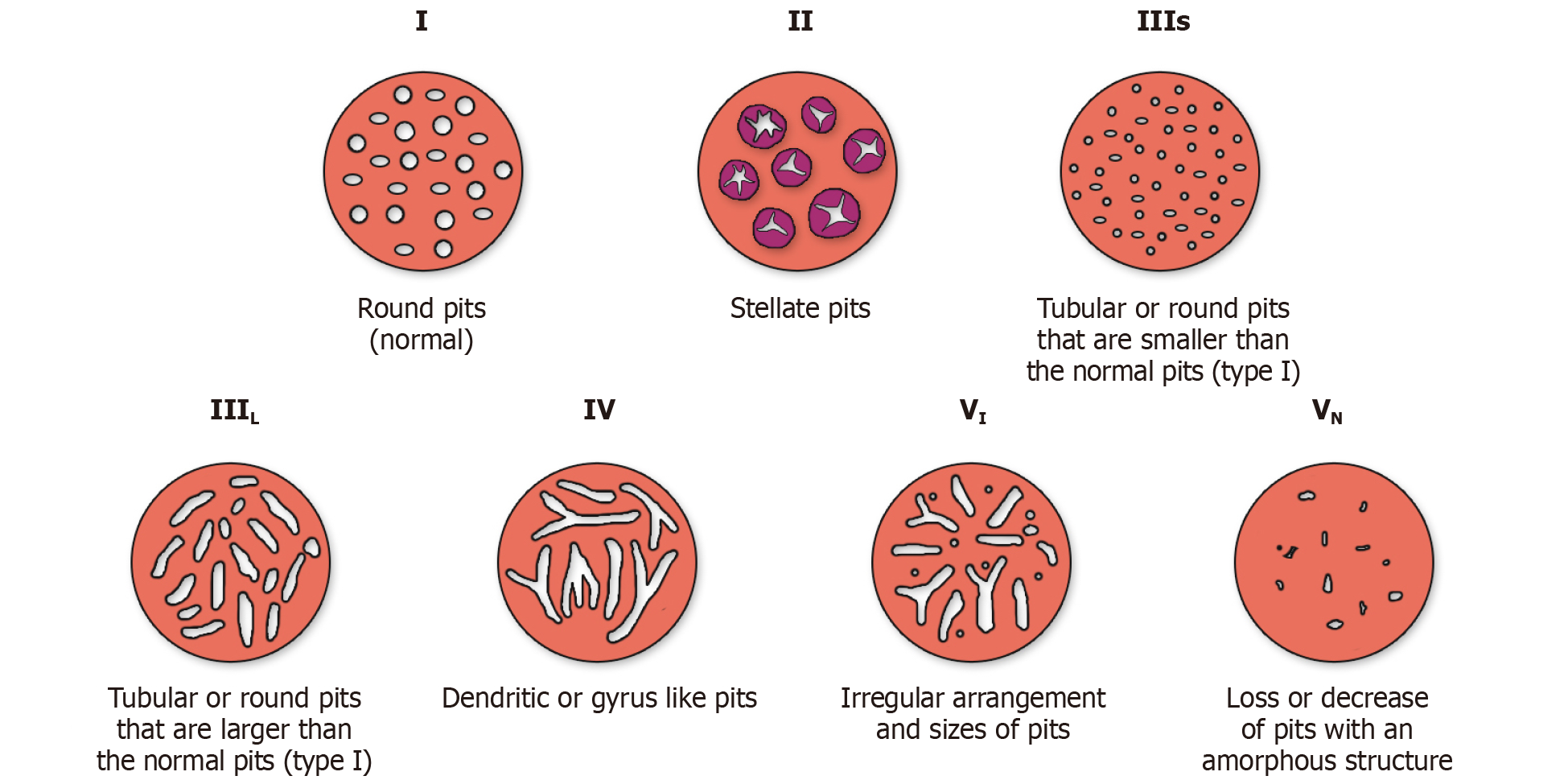
Paris classification of colon polyps has been depicted in Figure 3 . It seems that the first polyp detected in the sigmoid colon of the presented case is type Ip (Figure 1) based on Paris classification as noted above. However, what if we wanted to define the second lesion detected in the transverse colon: It is widely accepted that they are.
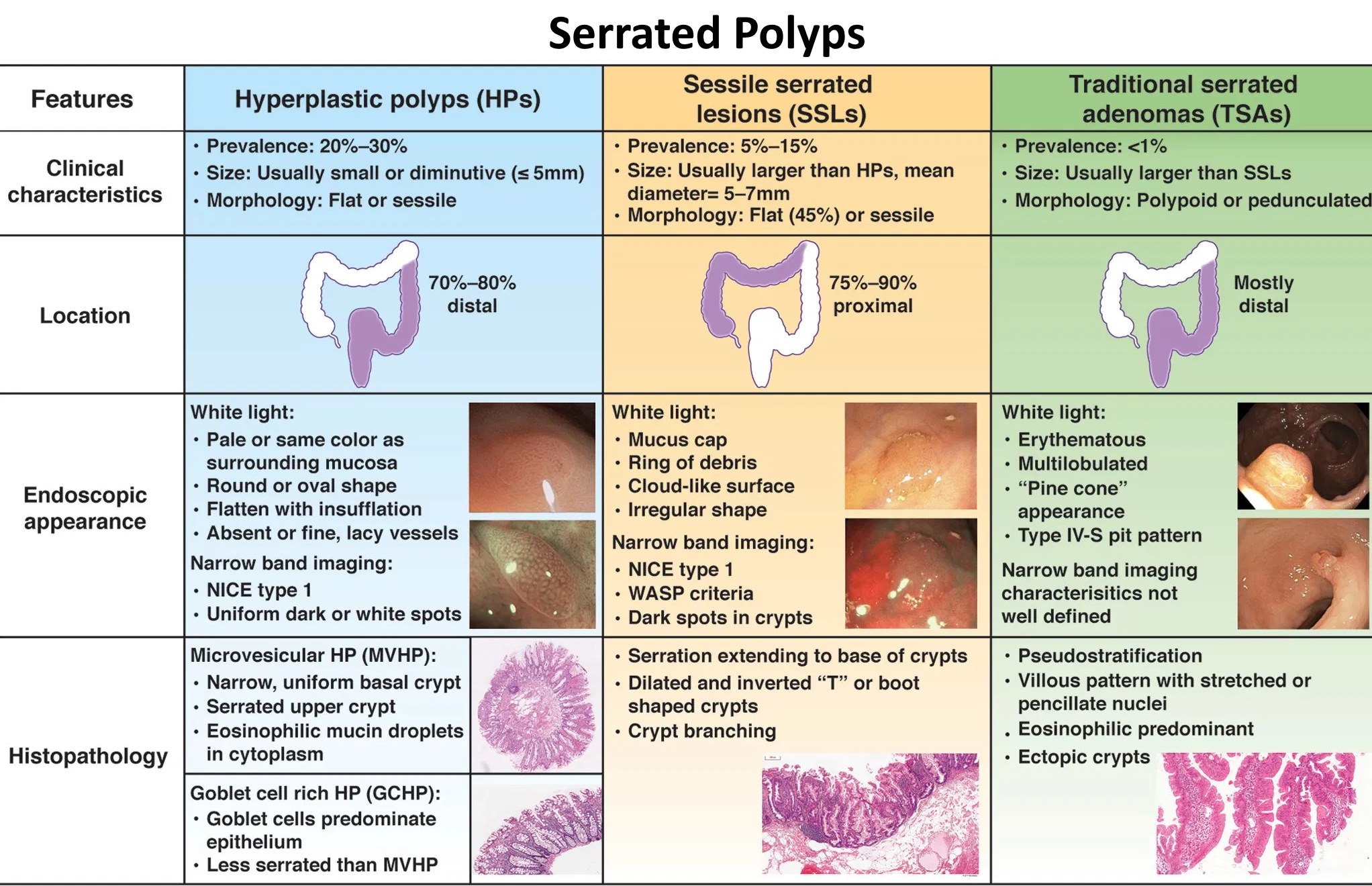
Showing 4 Serrated Polyp Subtypes A Microvesicular
The Paris classification is a morphological classification of polyps that can predict invasive disease risk in lesions . Based on the Paris classification, polyps can be classified as protruding (0-Is—sessile, 0-Ip—pedunculated, and Isp—semi-pedunculated), flat (elevated 0-IIa, flat 0-IIb, and depressed 0-IIc) and excavated (Type 0-III).
PPT EQUIP Training session 2 PowerPoint Presentation, free download ID3345138

the Paris classification is an endoscopic classification of superficial colorectal lesion morphology, whereby a lesion is superficial when its endoscopic appearance suggests that the depth of penetration in the digestive wall is not more than into the submucosa, that is, there is no infiltration of the muscularis propria.
Paris endoscopic classification of polyps theGastroenterologist
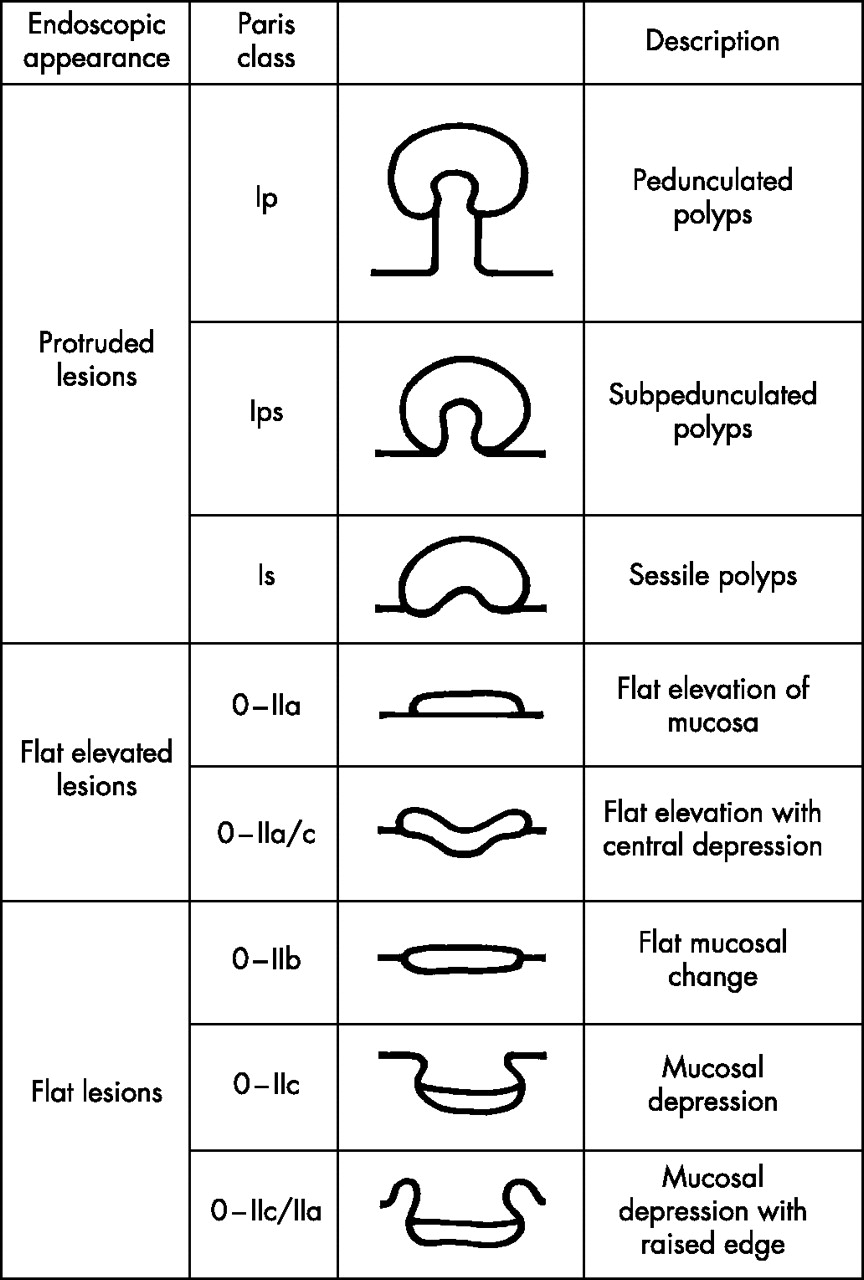
A polypoid neoplastic lesion protrudes above the surrounding surface at endoscopy. In the operative specimen, the height of the lesion is more than double the thickness of the adjacent mucosa. In peduncu-lated polyps, the base is narrow; in sessile polyps, the base and the top of the lesion have the same diameter.
Endoscopic management of colorectal polyps From benign to malignant polyps
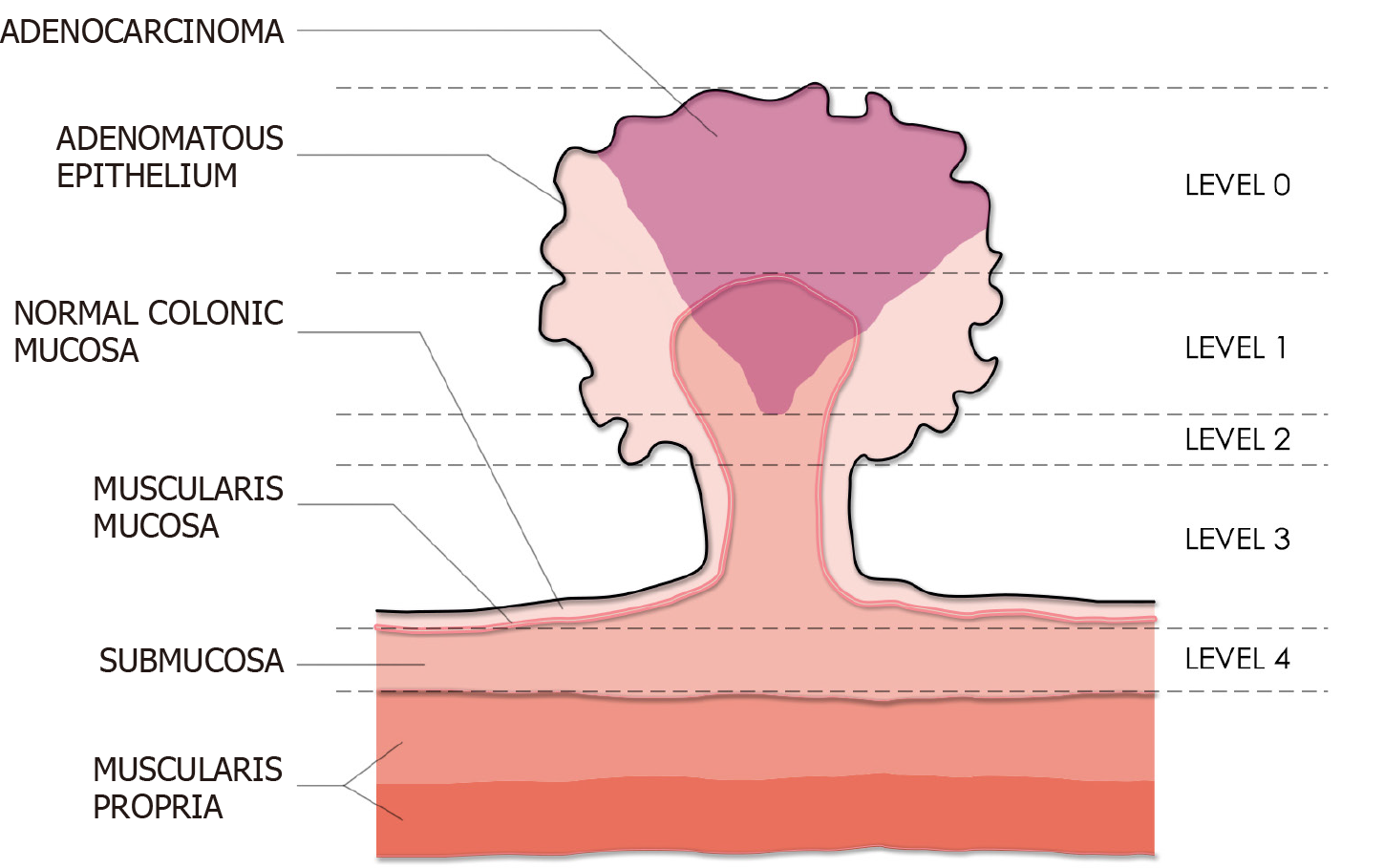
The Paris classification for superficial / early tumors presented and discussed in the general section should be part of a standard terminology for endoscopic assessment. Figure shows the schematic presentation. This classification applies to the entire gastrointestinal tract. In the colon, however, there are additional characteristics which.
Endoscopic Recognition and Classification of Colorectal Polyps Gastrointestinal Endoscopy Clinics

Small. Between 6 and 9 mm. The risk of cancer is low. A 2017 study found no cancer present in 6,523 small polyps. Large. 1 cm or more. The cancer risk may be higher in larger colon polyps. Doctors.
Malignant colorectal polyps
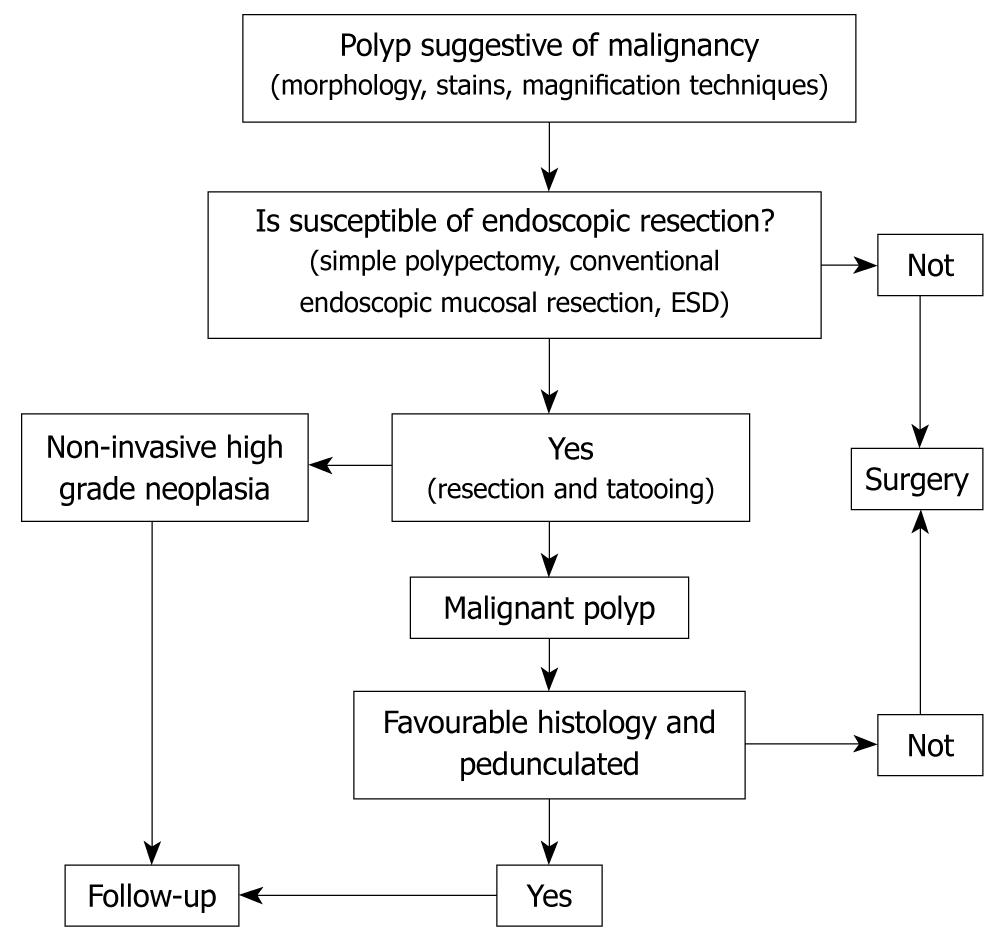
Many screen-detected cancers are malignant colorectal polyps and may potentially be cured with endoscopic resection, without recourse to the risk of major surgery or prolonged adjuvant therapies.. Polyp morphology is best described using the Paris classification. 4 Protuding lesions may be pedunculated (Ip), semi-pedunculated (Isp) or.
.![[PDF] Toric Intraocular lenses in cataract surgery Semantic Scholar](https://d3i71xaburhd42.cloudfront.net/189884ecb0001502ae6460090b33d43e52f6d6f6/4-Figure1-1.png "[PDF] Toric Intraocular lenses in cataract surgery Semantic Scholar")