Before and After Photos Tongue Tie Life
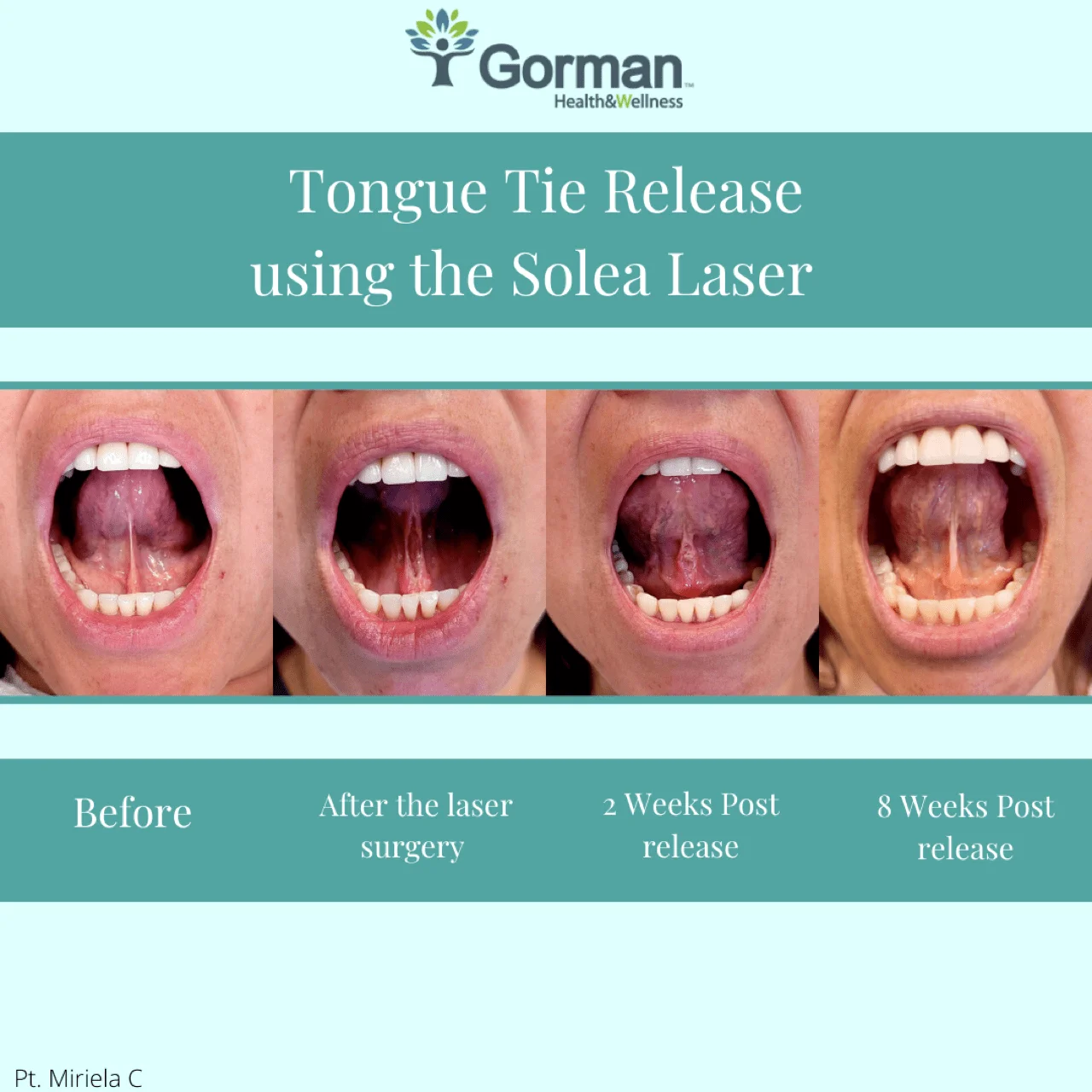
This has led to overdiagnosing infants and children with tongue-tie and unnecessary surgery. Some less severe forms of tongue-tie may resolve spontaneously with time, explaining why its prevalence is higher in studies evaluating only newborns (1.72% to 10.7%) than in those investigating children, teenagers, and adults (0.1% to 2.08%).
Tongue Tie OMT of New York

Tongue-tie surgery releases the lingual frenulum to allow for proper extension and movement of the tongue. Tongue-tie surgery may be indicated if the lingual frenulum does not recede or loosen over time and it restricts tongue movement enough to interfere with an infant's, child's, or adult's health or quality of life. Westend61 / Getty Images.
Laser Frenectomy and TongueTie Dentist Orange, Milford, West Haven

Ankyloglossia, or tongue-tie, is a congenital anomaly that is characterized by a short lingual frenulum. 1 Recently, there has been a greater focus on the functional status of the tongue and symptoms caused by the frenulum rather than purely anatomic diagnoses. 2 The lingual frenulum may be attached anywhere from at or near the tip of the tongue to the posterior aspect of the undersurface of.
Tongue Ties What Parents Need to Know
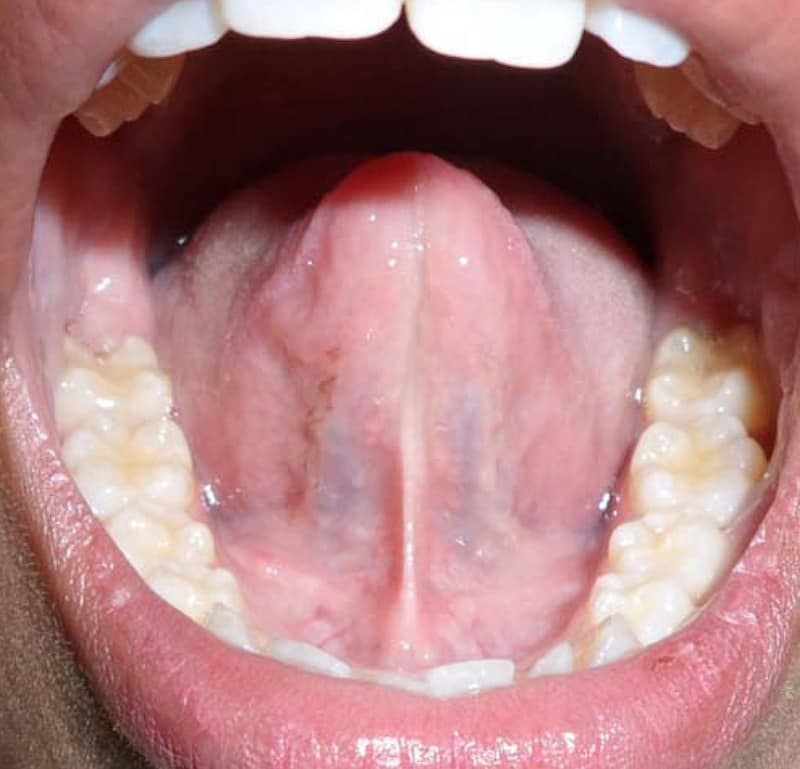
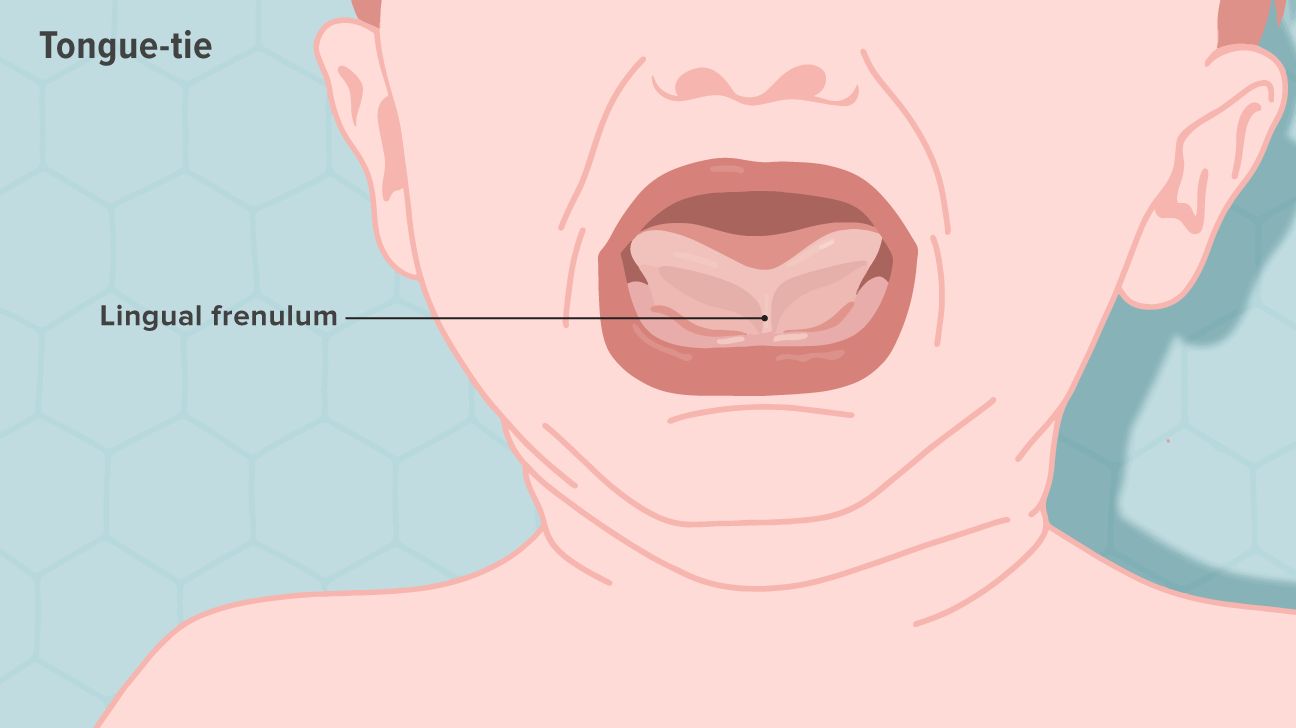
Tongue-tie, or ankyloglossia, is when an unusually short, thick or tight band of tissue tethers the bottom of the tongue's tip to the floor of the mouth. The band of tissue is called the frenulum. When it is too short or tight, it can restrict the tongue's range of motion. Up to 10% of all newborns are born with ankyloglossia.
Diagnosis tongue tie & indikasi frenektomi
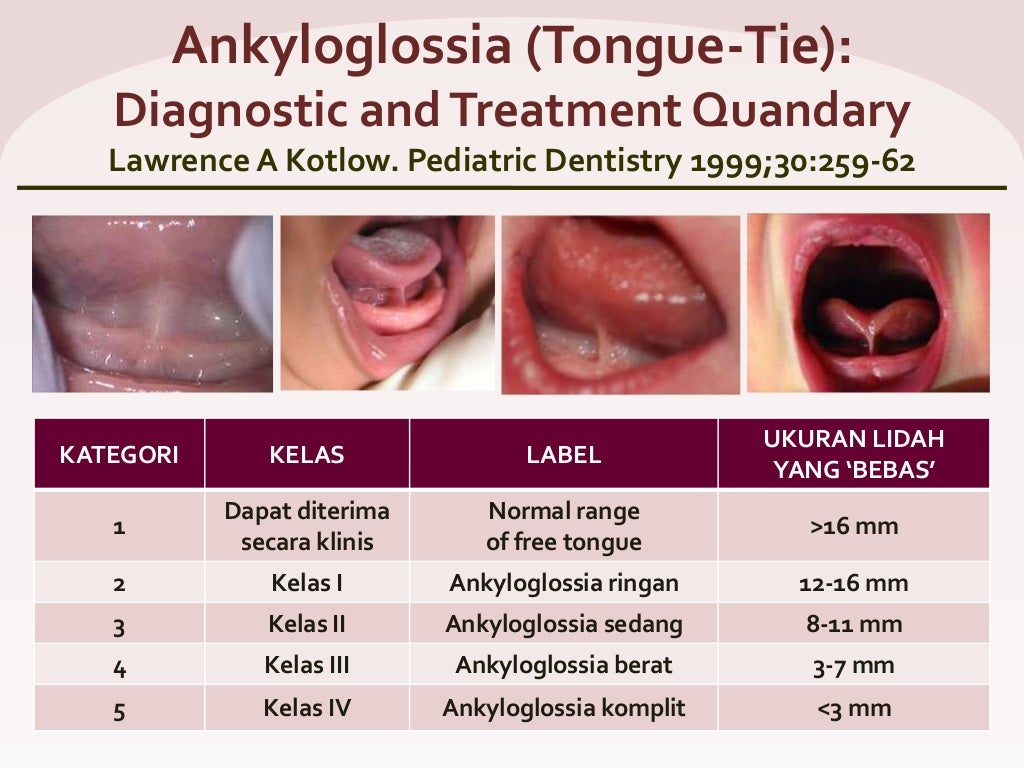
The tongue is attached to a bone called the hyoid bone, which is attached to numerous muscles. With a tongue-tie, headaches and neck and shoulder pains result from the tightening of the hyoid bone muscles. A person with a tongue-tie has their head tilted forward all the time. This posture affects muscles that cause back, shoulder, neck, and.
Lip and Tongue Ties How to check for one, Revision Tips, and PostRevision Aftercare Meghan Birt

Difficulty raising the tongue, moving it sideways, or sticking out the tongue. In older children or adults, tongue tie can cause symptoms like: Speech difficulties. Problems with eating, such as issues licking an ice cream cone. Inability to stick out the tongue beyond the upper lip. Issues kissing with tongue.
How I went from Ankyloglossia to SpankyNewGlossia, by letting my tongue be Frank with me A

This might mean your baby has poor weight gain, frequent feedings and/or a lack of swallow sounds. If you're breastfeeding, you may also have symptoms related to your baby's tongue-tie, including: Cracked, sore nipples. Pain during nursing. Insufficient milk supply (if there are long-term transfer issues).
Tongue Tie Information for parents and practitioners Tongue Tie
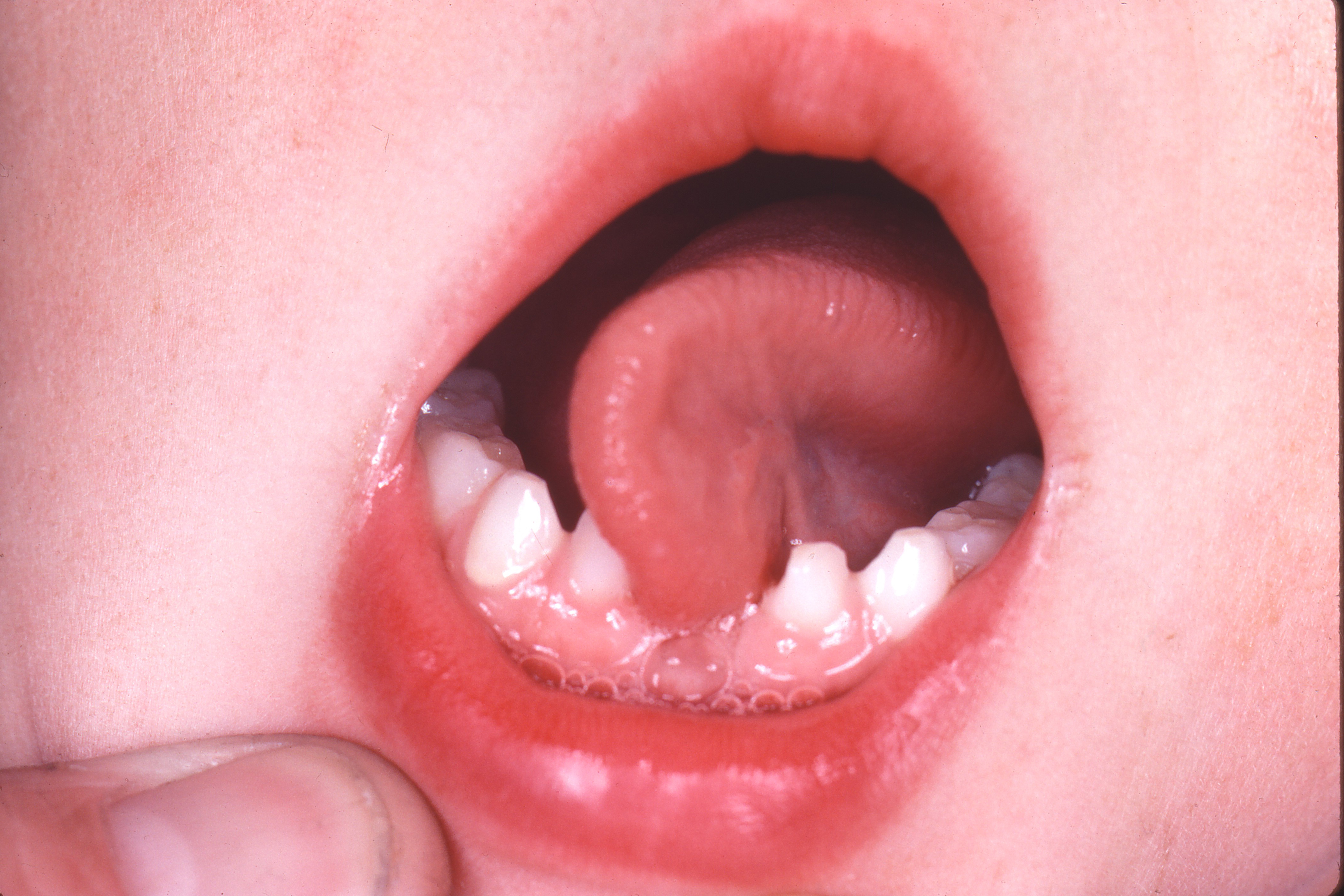
a small surgery to cut the piece of skin connecting the tongue to the bottom of the mouth. In young babies, the surgery is usually done without any anaesthetic. In older babies (and children and adults) the surgery is usually done with general anaesthetic. After surgery, most babies get better quickly and are able to feed better.
Symptoms of tongue tie in adults Tongue tie, Myofunctional therapy, Human body organs

You can recognize common signs of tongue-tie and improve your overall health by receiving appropriate treatment or, with the right support, you can learn techniques to cope with this condition. Tongue-tie vs. normal tongue. Tongue-tie is a condition with an unusually tightened, thickened, and shortened frenulum. Normally, the frenulum.
What is tonguetie (Ankyloglossia) Problems Symptoms Treatment Pathak Dental Clinic
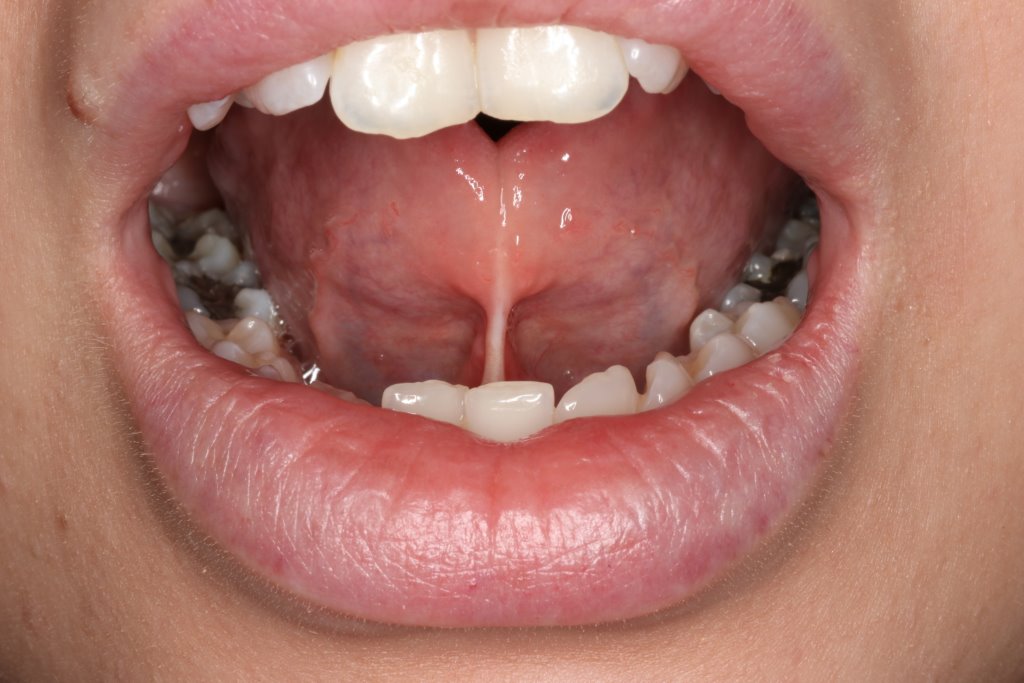
There are two main causes of tongue-tie; either the frenum is too short and tight, or it did not move back down the tongue during development and is still attached to the tongue tip. Many adults and children will not have problems despite having a short, tight lingual frenum. Signs of tongue-tie. The signs of tongue-tie can include: The tongue.
TongueTie Carmen Woodland Myofunctional Therapy
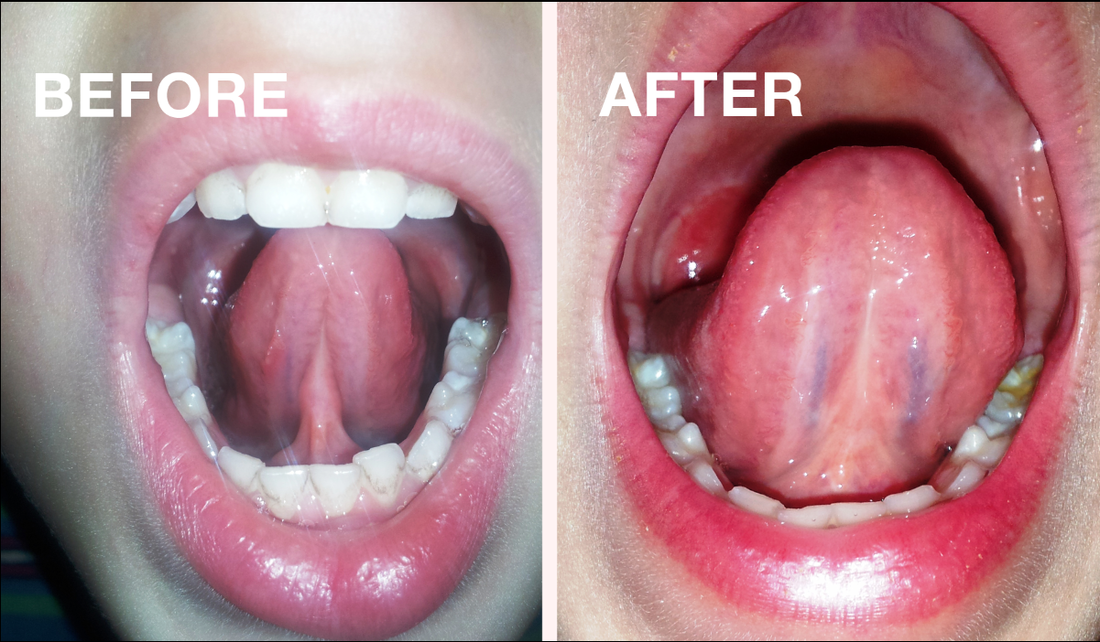
tongue tie, but where there is a short, tight or thick frenulum, this is called a tongue tie. A tongue tie can restrict tongue mobility and may cause feeding challenges. The incidence of tongue tie is approximately 5-10% of babies (Todd and Hogan, 2015) and it is more common in boys than girls.
Assessment of posterior tongue mobility using lingual‐palatal suction Progress towards a

drinking. breathing. kissing. Other common signs of tongue-tie in adults include: problems sticking your tongue out of your mouth past your lower front teeth. trouble lifting your tongue up to.
Live Chennai Important details regarding Tongue tie release and breast feeding ,The Bunny Teeth
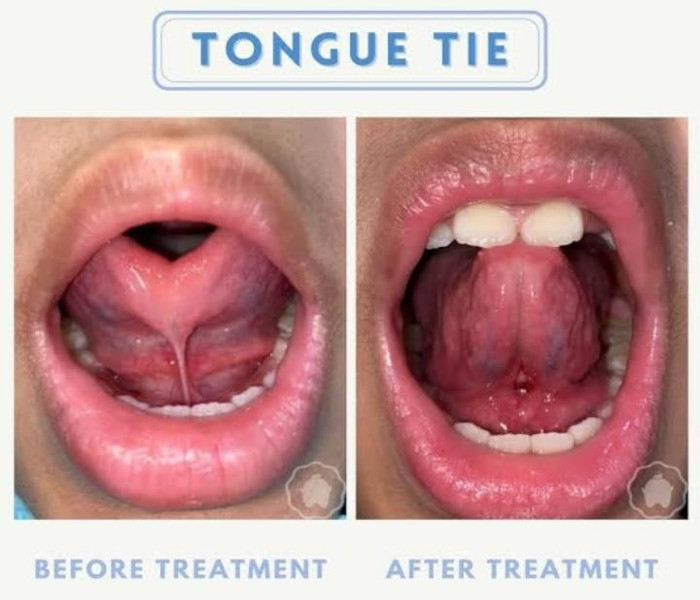
Ankyloglossia, also known as tongue-tie, is a congenital oral anomaly that may decrease the mobility of the tongue tip and is caused by an unusually short, thick lingual frenulum, a membrane connecting the underside of the tongue to the floor of the mouth. Ankyloglossia varies in degree of severity from mild cases characterized by mucous membrane bands to complete ankyloglossia whereby the.
Laser Frenectomy Procedure, TongueTies and LipTies Seattle Smiles Dental
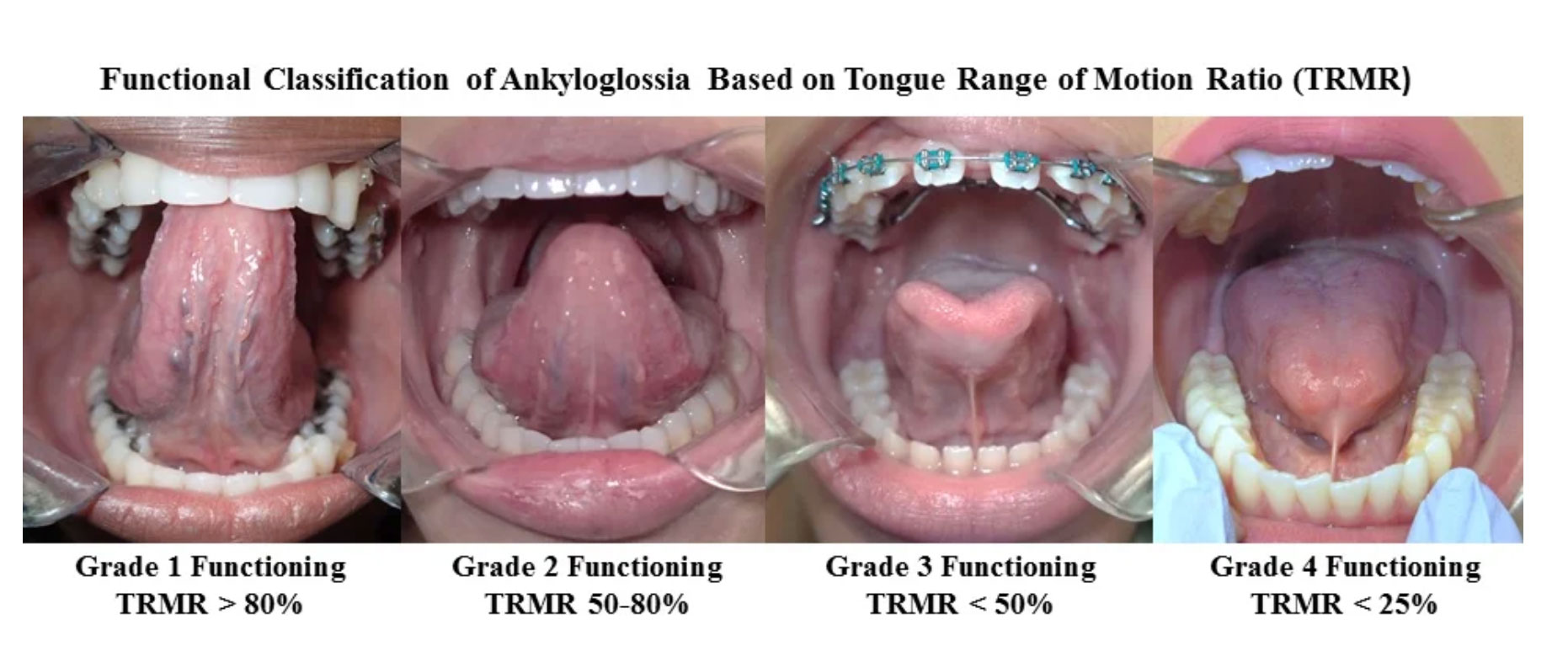
Tongue-tie (ankyloglossia) is a condition present at birth that restricts the tongue's range of motion. With tongue-tie, an unusually short, thick or tight band of tissue (lingual frenulum) tethers the bottom of the tongue's tip to the floor of the mouth, so it may interfere with breast-feeding. Someone who has tongue-tie might have difficulty.
TongueTie What It Is and How It's Treated
That was my case as I had a tongue-tie and passed it to my three girls. How common is a tongue-tie in adults? Estimates for infants and children are around 25% of babies and children are affected by a restricted tongue, or tongue-tie. It would follow then that adults likely have a similar incidence of tongue-tie of 25% if properly checked.
Tongue Tie Clinic with our Specialist Oral Surgeon 17th Jan Frazer Dental

When the lingual frenulum restricts the tongue's movement, it can impede these functions, leading to difficulties in speech, eating, and even breathing. The effects of an untreated tongue tie in adults extend beyond mere physical discomfort, potentially affecting emotional well-being and social interactions.
.

![Driving from Coffs Harbour to Port Macquarie Pacific Motorway, Mid North Coast NSW [4K] YouTube](https://i.ytimg.com/vi/1x5wkUaPnsA/maxresdefault.jpg "Driving from Coffs Harbour to Port Macquarie Pacific Motorway, Mid North Coast NSW [4K] YouTube")